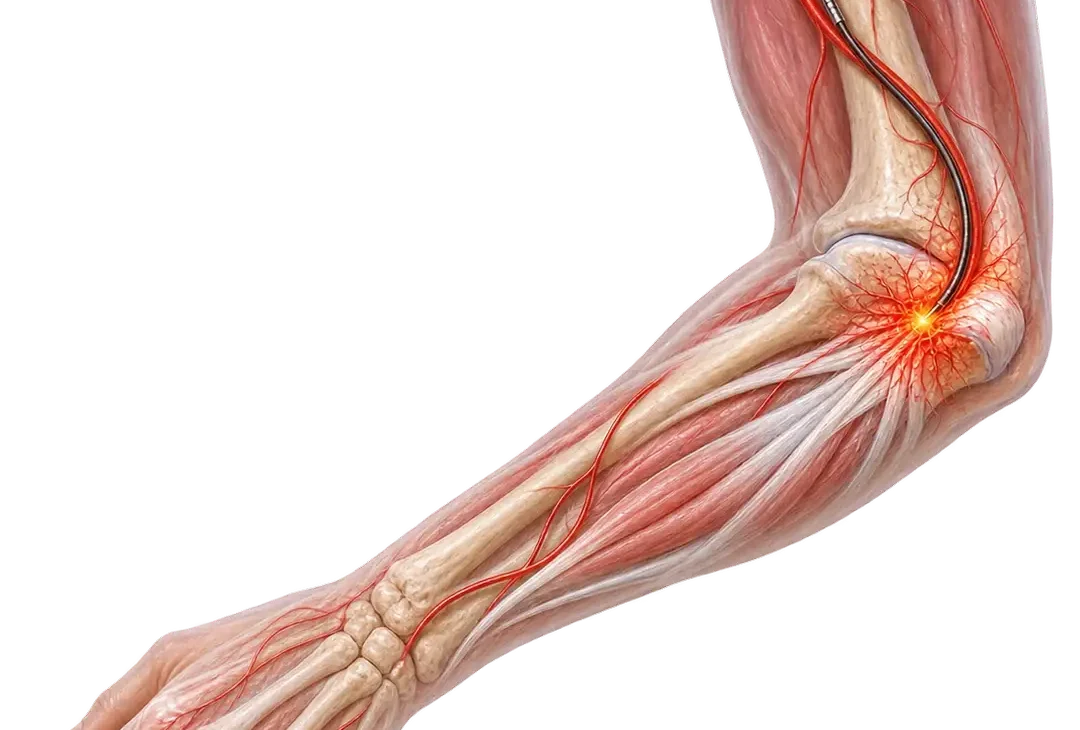
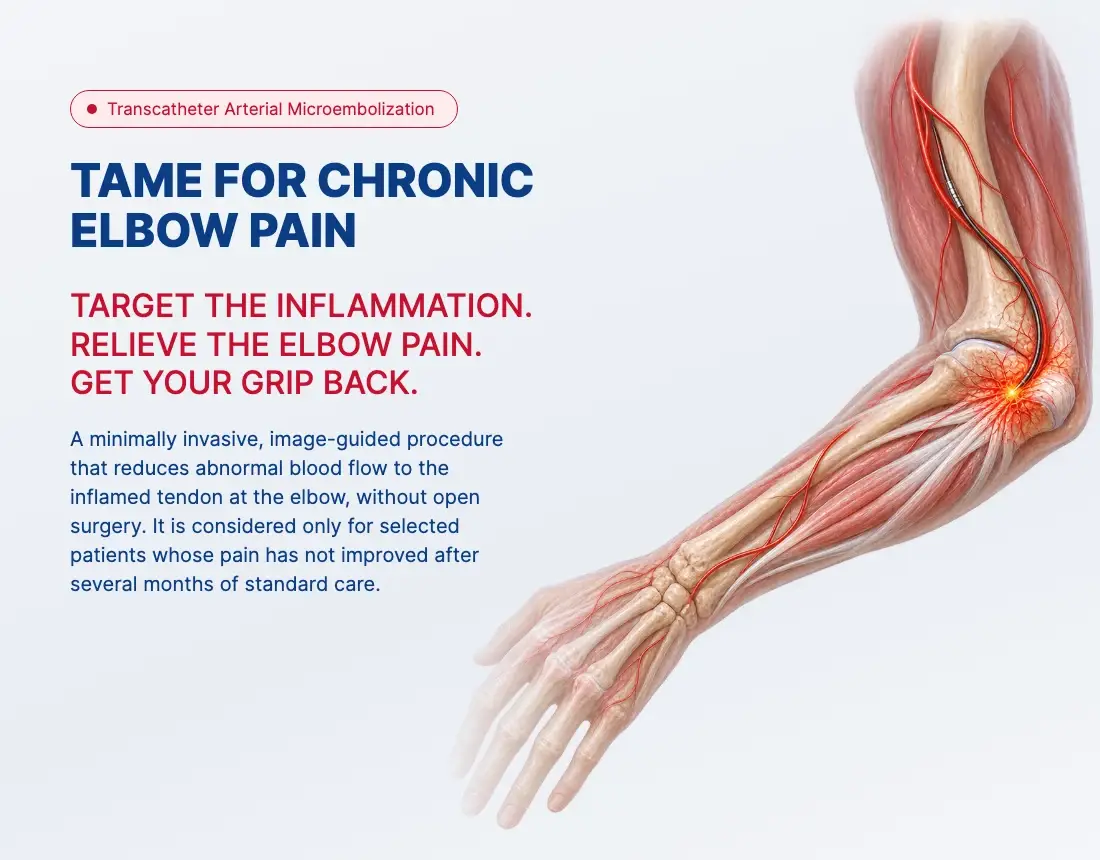
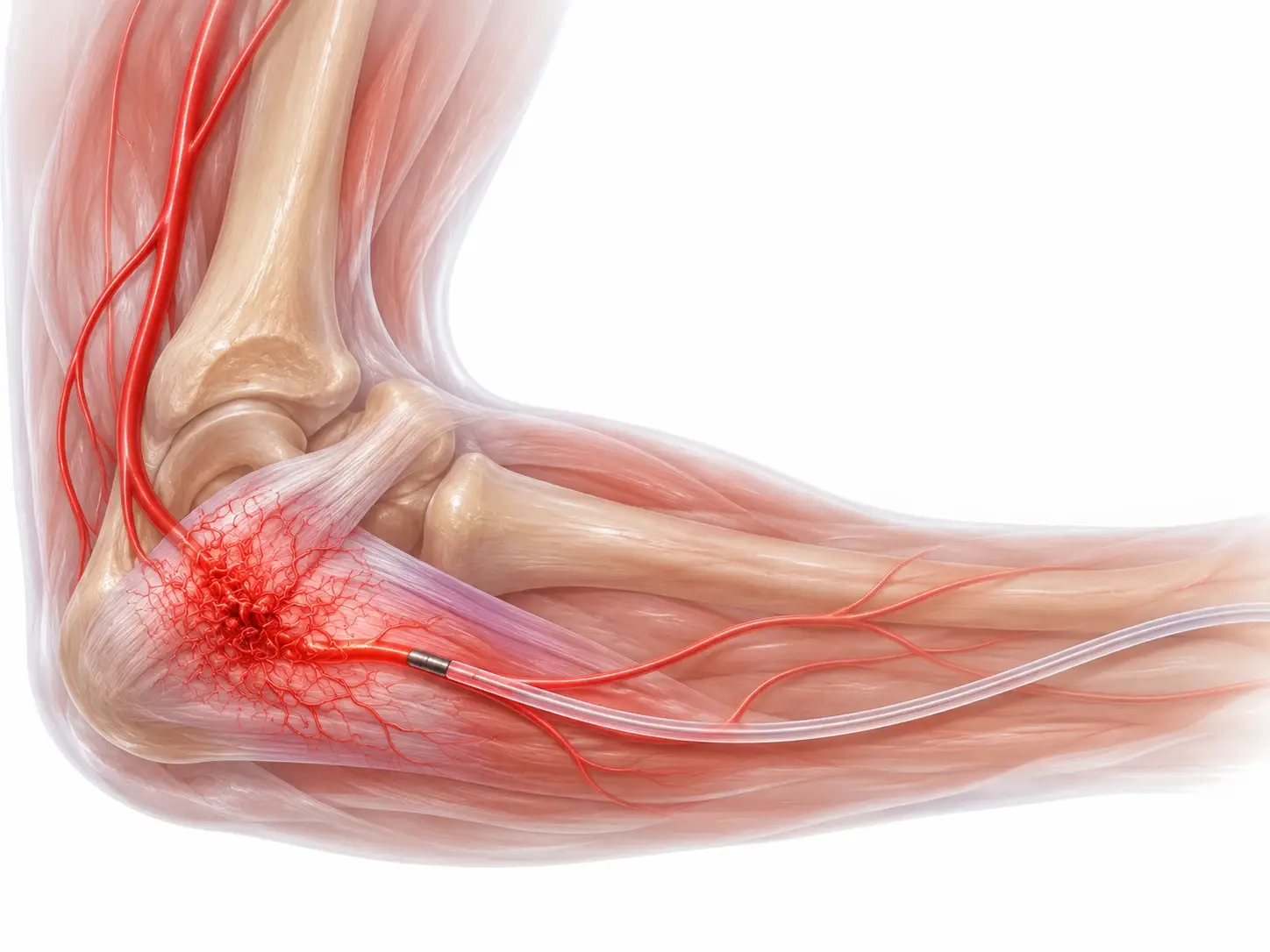
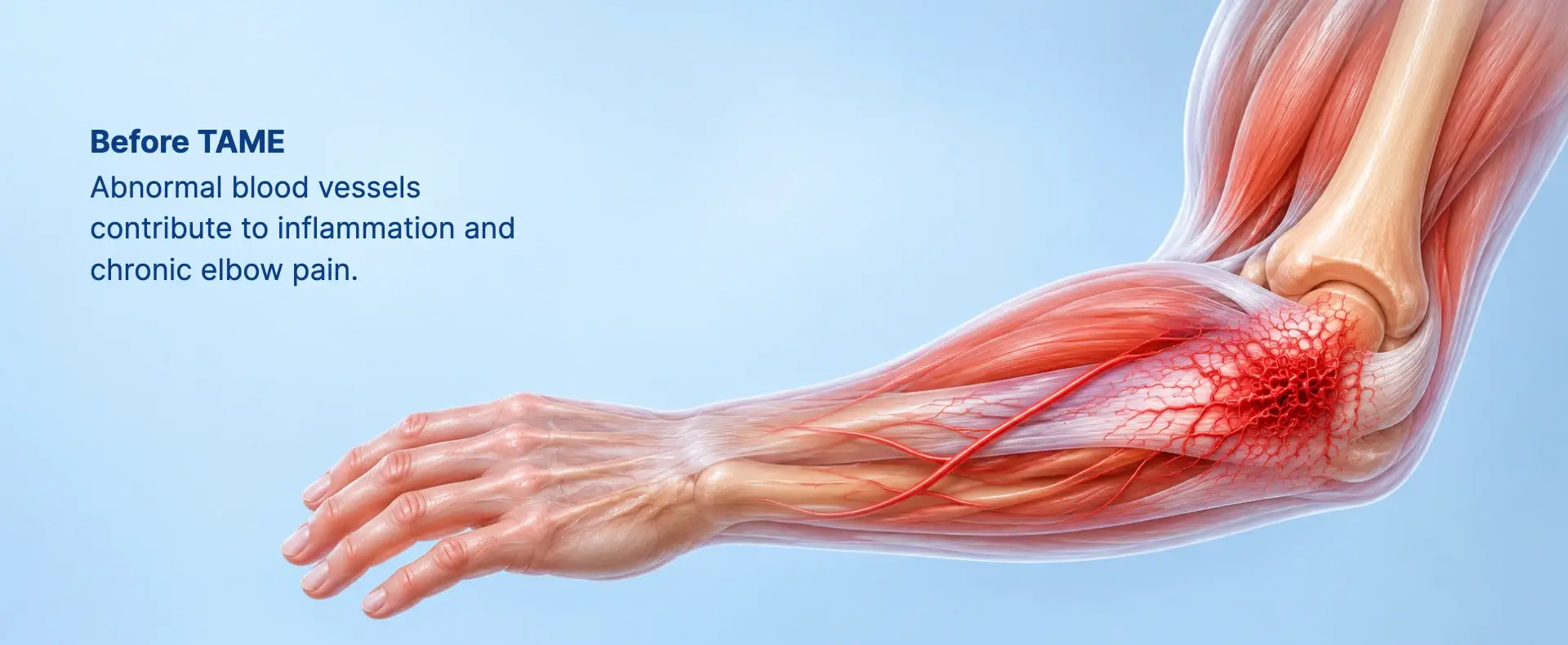
A minimally invasive, image-guided procedure that reduces abnormal blood flow associated with chronic elbow tendon inflammation, such as tennis elbow, without open surgery.

01
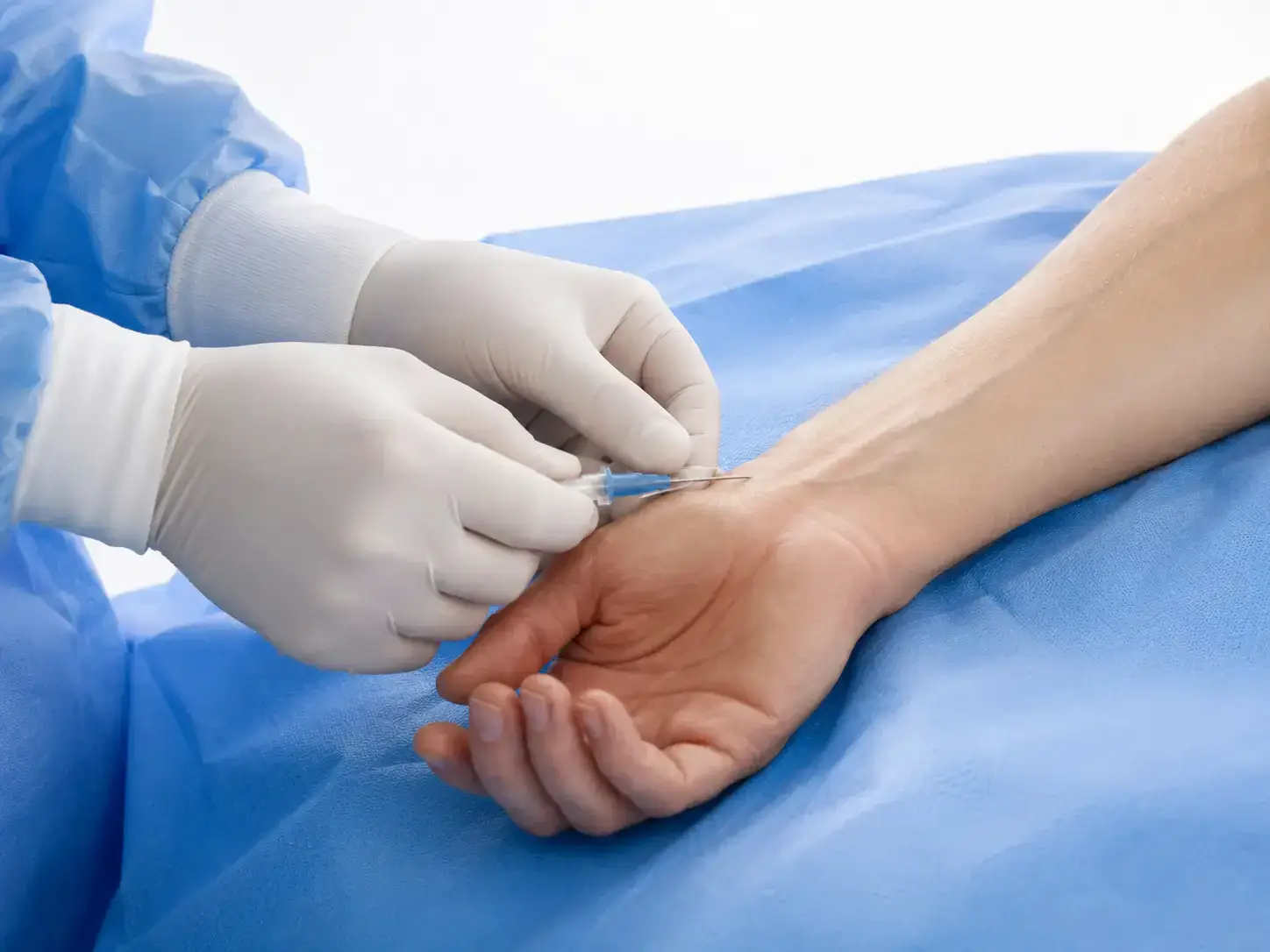
A small needle or catheter is placed into an artery supplying the elbow.
02
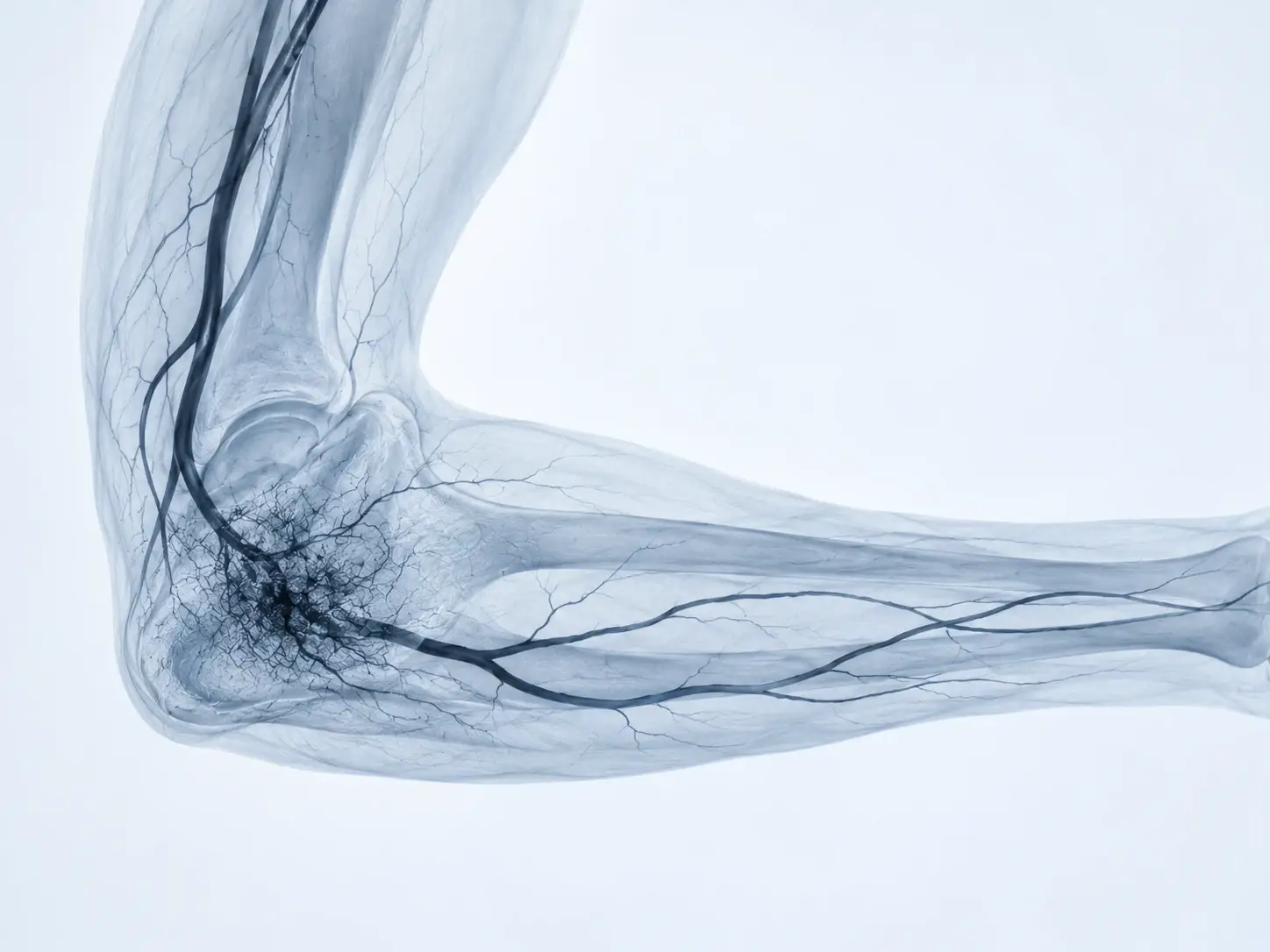
Imaging identifies abnormal blood flow around the painful elbow tendon.
03
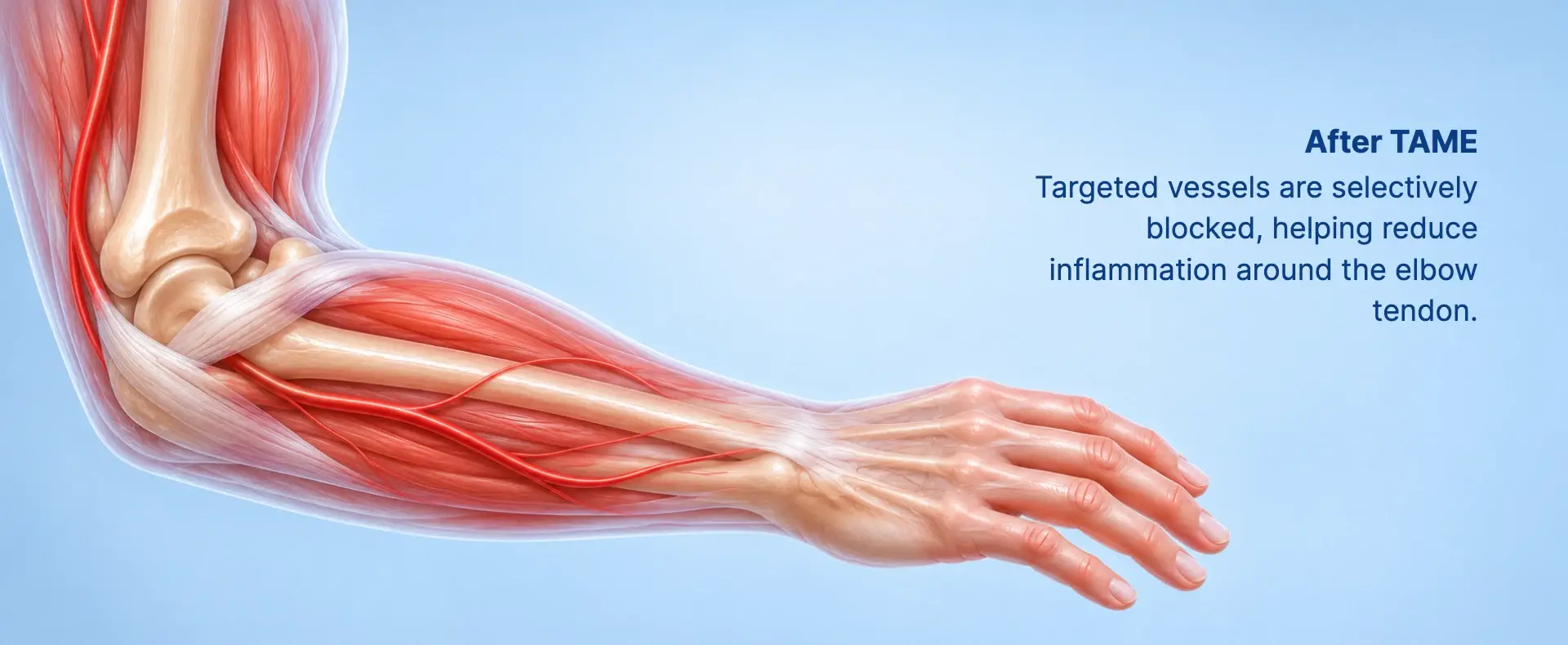
Embolic material is delivered to reduce abnormal inflammatory blood flow.
04
The access site is closed and you are monitored before discharge.

What to expect after TAME for Chronic Elbow Pain. Most patients recover quickly and return to normal activities within days.
Outpatient procedure.
You go home the same day.
Light everyday activity is usually fine. Keep the access site clean and dry.
Most patients return to their normal daily activities.
Many patients begin to notice less pain and stiffness.
Pain and function may continue to improve over the following months.
How Transcatheter Arterial Microembolization (TAME) for Chronic Elbow Pain
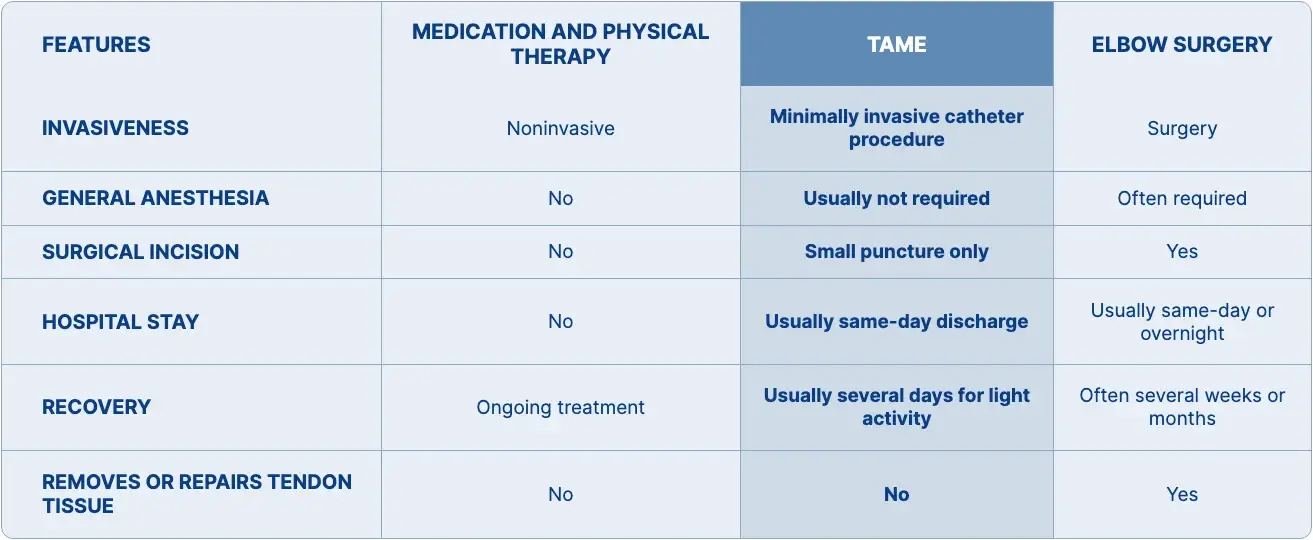
No. TAME does not repair a torn tendon or reverse structural damage. It is designed to reduce abnormal blood flow associated with chronic inflammation, which may help reduce pain and improve elbow function.
TAME may be considered for selected patients with long-lasting elbow pain, most often tennis elbow, when several months of standard care such as rest, activity changes and physical therapy has not provided enough relief. A confirmed diagnosis comes first.
Steroid and PRP injections deliver treatment directly into or around the painful tendon. TAME works through the arterial blood supply, targeting abnormal vessels associated with chronic inflammation. Neither treatment is right for every patient, and your doctor can help you compare them.
The access area is numbed with local anesthesia, and medication may be provided to help you relax. You may feel a brief pinch or pressure during the procedure, but significant discomfort is not expected.
By reducing pain and inflammation, TAME may help some patients grip, lift, twist and shake hands more comfortably. Results vary from patient to patient.
Improvement is usually gradual rather than immediate. Some patients may notice changes within the first few weeks, while pain and function may continue to improve over the following months.
TAME is intended to reduce pain and improve function, not repair structural damage. If surgery becomes necessary in the future, your orthopedic or hand specialist can discuss the appropriate options.
No. Embolization for tennis elbow is still being studied. Early research, mostly small studies, has reported pain reduction in some patients, but larger clinical studies are still needed and results vary.
Coverage varies by insurance company, diagnosis, medical necessity, and plan requirements. Before treatment is scheduled, our team can verify your benefits and request authorization when required.
Tests & Treatments
Managing joint pain and treating joint pain are not the same thing. This pillar page explains the clinical difference and how minimally invasive procedures - GAE, TAME, and PFE - address the root cause when management alone isn't enough.
Tests & Treatments
Chronic hip pain that hasn't responded to injections or physical therapy may have a vascular cause. Learn how TAME offers lasting relief without surgery.
Knee Pain & GAE
Cold weather amplifies chronic joint pain for physiological reasons - not psychological ones. Learn what is actually happening and what minimally invasive treatments can break the cycle.
Knee Pain & GAE
Tests & Treatments
Hand osteoarthritis and the vascular treatment option most patients never hear about.
Tests & Treatments
When stretching and orthotics are not enough - understanding PFE and the vascular source of chronic heel pain.
Tests & Treatments
Bone and Joint Action Week runs from October 12 to 20 each year - a reminder that musculoskeletal health affects nearly every aspect of daily life. For millions of Americans, chronic shoulder pain is a daily reality that limits sleep, work, and the ability to do ordinary things.
Heart & Vascular Health
Understanding chronic venous insufficiency and what Heart Vascular and Leg Center can do about it.
Knee Pain & GAE
PAD, AFib, and heart disease share the same risk factors and significantly raise each other's risk. A vascular specialist in Bakersfield explains the connection and what it means for your care.
Knee Pain & GAE
Most people with chronic knee or joint pain have quietly learned to live with it. A vascular specialist in Bakersfield explains why that is worth reconsidering this Pain Awareness Month.
Heart & Vascular Health, PAD & Circulation
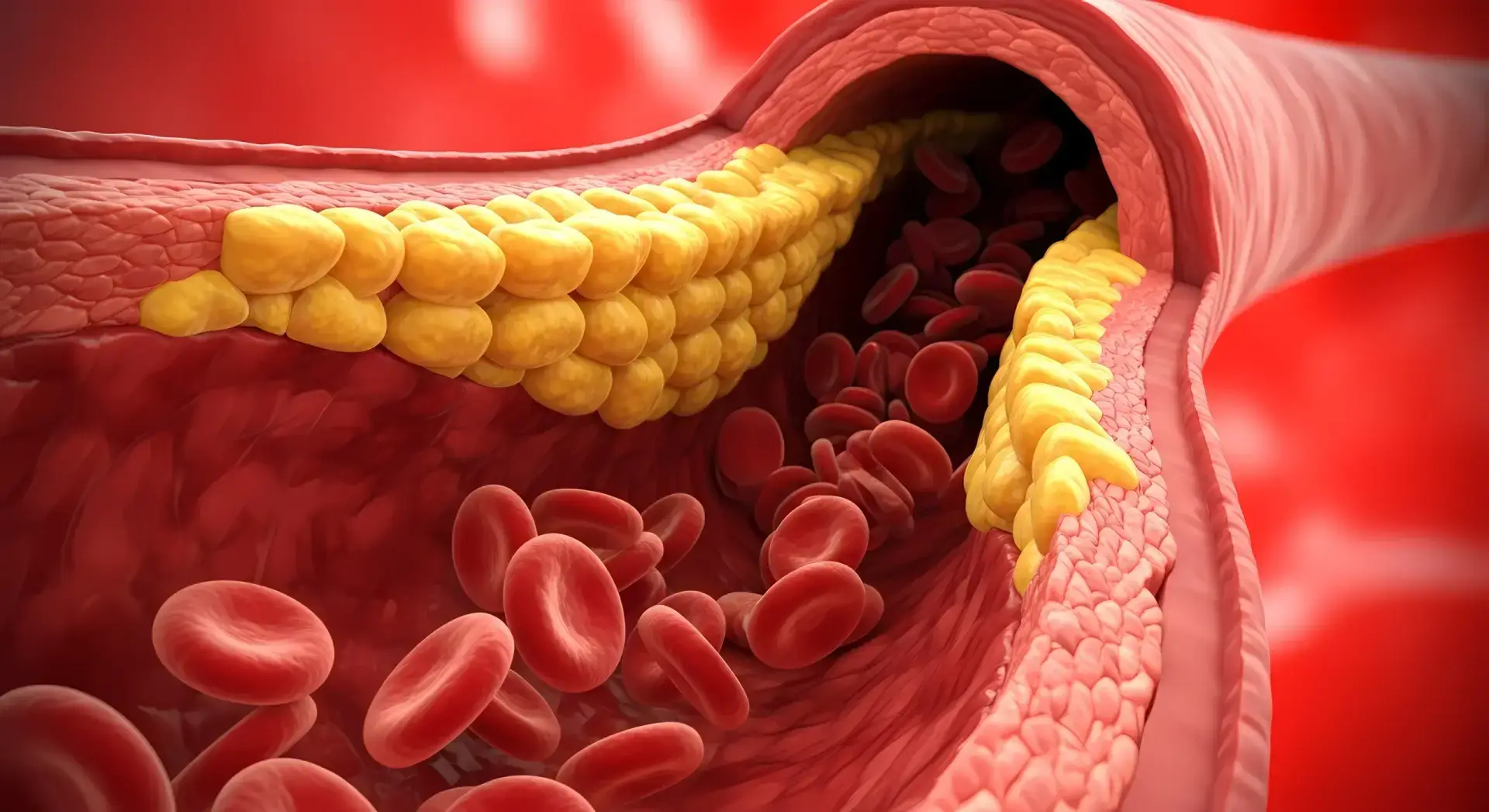
When someone gets a high cholesterol result, the conversation almost always goes the same direction: heart disease risk, statins, diet changes, and keeping an eye on blood pressure. All of that is appropriate. But there is something consistently missing from that conversation. The same cholesterol buildup that narrows the arteries near your heart does the exact same thing to the arteries supplying your legs. And for a lot of patients managing high cholesterol, nobody has told them that.
Heart & Vascular Health, PAD & Circulation
September is Vascular Disease Awareness Month and PAD Awareness Month. Here is why that matters specifically for patients in Bakersfield and Kern County, and what a free vascular screening can tell you.
Knee Pain & GAE
Knee Pain at Night: Why It Gets Worse When You Stop Moving and What It Could Mean Most people expect joint pain to get worse during activity. Push it too hard, feel it afterward. That logic makes sense. So when knee pain is worst at night, when you are lying still, not putting any weight on it, not doing anything at all, it catches people off guard. Some assume they slept in a bad position. Others take a painkiller and try to push through. What fewer people know is that nighttime knee pain has a specific meaning. It is not random. It is telling you something about what is driving the pain, and it points directly toward a mechanism that standard treatments often miss.
Heart & Vascular Health, PAD & Circulation
What Happens to Your Legs When You Sit All Day. And Why It Matters More Than You Think sitting all day effects on leg circulation poor circulation vascular health Bakersfield Most people know that sitting too much is not great for them. They have heard it enough times. But the conversation usually stays vague, centered around back pain, posture, or burning calories. What gets far less attention is what prolonged sitting does specifically to the blood flow in your legs. And for a significant number of people, particularly those with diabetes, high blood pressure, or a family history of heart disease, the effects are not just discomfort. They are the early stages of a real vascular problem.
PAD & Circulation
Your Heart Gets a Lot of Attention. Your Leg Arteries Deserve the Same
chronic knee pain management vs treatment what actually helps HVLC Bakersfield
Every February, American Heart Month reminds people to take care of their arteries, watch their cholesterol, check their blood pressure, and protect their cardiovascular health.
Knee Pain & GAE
Pain management and pain treatment are not the same thing. If your knee still hurts after months of coping, here is what a vascular specialist in Bakersfield thinks you should know.
Mon - Thu
8am - 6pm
Fri
8am - 5pm
Sat - Sun
Closed
Medicare
Medicare
Most PPOs
Same-day appointments often available
5020 Commerce Dr, Bakersfield, CA 93309
A patient services representative will reach out shortly to help schedule your consultation.
Prefer to call us directly? 661-324-4100
We'll call you shortly at the number you provided. Thanks for reaching out to Heart Vascular & Leg Center.
Follow us on: