Varicose Veins Are Not Just a Cosmetic Problem. Here Is What They Are Actually Telling You.
Varicose Veins Are Not Just a Cosmetic Problem. Here Is What They Are Actually Telling You.
If you have varicose veins, there is a good chance someone has told you they are “just cosmetic.” A minor issue. Something to treat if it bothers you visually, but not a medical priority.
That is not accurate and if you have been living with leg aches, swelling, heaviness, or skin changes, your body has been signaling something more serious for a while.
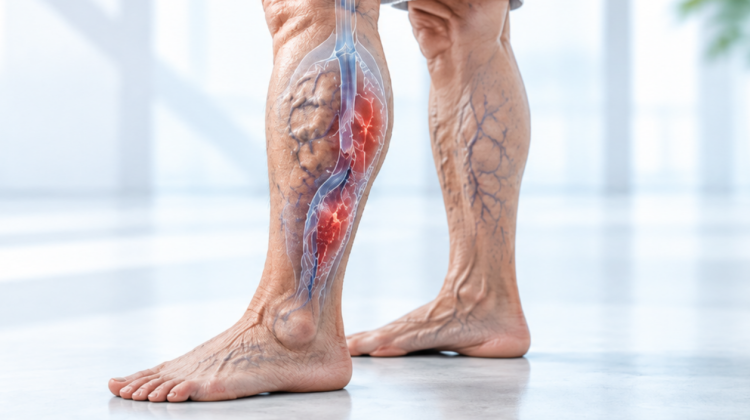
Varicose veins are a visible sign of chronic venous insufficiency (CVI), a condition where the veins in your legs are no longer doing their job properly. Left unaddressed, CVI can progress from discomfort to skin damage, ulcers, and blood clots.
This guide explains what is actually happening in your legs, what symptoms to watch for, and how the team at Heart Vascular and Leg Center in Bakersfield approaches treatment.
Read Also: Understanding Vascular Conditions | Heart Vascular and Leg Center
What Are Varicose Veins, Really?
Veins carry blood from your legs back up to your heart. To do this against gravity, they rely on one-way valves that open to let blood through and close to prevent it from falling back down.
When those valves weaken or fail – due to age, genetics, prolonged standing, pregnancy, or previous blood clots – blood pools in the vein. The vein walls expand under the pressure, becoming twisted and visible beneath the skin.
Those twisted, rope-like veins you see? They are the result of years of increased pressure. By the time they are visible, the underlying valve dysfunction has usually been present for some time.
Chronic Venous Insufficiency: The Bigger Picture
Chronic venous insufficiency is the medical term for this ongoing valve failure. Varicose veins are one of its most visible symptoms – but they are not the only one. CVI affects circulation throughout the lower leg and, over time, affects the skin, tissue, and surrounding structures.
According to the Society for Vascular Surgery, CVI affects an estimated 150,000 new patients every year in the United States, and up to 40% of the population has some form of venous disease.
Learn more about the scope of venous disease: Society for Vascular Surgery – Venous Disease Resources ↗
Symptoms That Tell You This Is More Than Cosmetic
Varicose veins are visible. But CVI produces a range of symptoms that go beyond appearance. If any of these sound familiar, the issue is likely medical, not just visual:
- Leg aching or heaviness that worsens after standing or sitting for long periods
- Swelling in the ankles or lower legs, especially by end of day
- Itching or burning around the veins
- Restless legs or cramping at night
- Skin that has darkened, thickened, or become leathery near the ankle
- Open sores or wounds near the ankle that are slow to heal (venous ulcers)
If you are experiencing skin changes or open wounds, CVI has progressed to a stage that needs medical attention soon. Venous ulcers are notoriously difficult to heal without treating the underlying vein problem.
Read Also: Peripheral Arterial Disease and Leg Symptoms | Heart Vascular and Leg Center
How Venous Insufficiency Progresses Over Time
CVI is classified using the CEAP system (Clinical, Etiology, Anatomy, Pathophysiology), which ranges from C0 (no visible signs) to C6 (active venous ulcer). Most people do not think about their veins until they reach C2 or C3 – visible varicose veins with swelling.
But the condition does not stay still. Without treatment, CVI tends to worsen:
- C2-C3: Visible varicose veins and swelling. Aching and heaviness are common.
- C4: Skin changes – darkening, thickening, eczema-like texture. This is a warning sign.
- C5-C6: Healed or active venous ulcers. At this stage, wound care alone is rarely sufficient without vein treatment.
Treating varicose veins at C2-C3 is significantly more straightforward – and more effective – than waiting until C5 or C6.
CEAP Classification – American Venous Forum ↗
Risks That Go Beyond Discomfort
Varicose veins also create conditions where more serious complications can develop:
Superficial Thrombophlebitis
Inflammation and clotting in a varicose vein near the skin surface. Causes pain, redness, and warmth. While different from deep vein thrombosis, it is uncomfortable and can sometimes progress.
Deep Vein Thrombosis (DVT)
Blood clots in the deeper veins of the leg. People with CVI have a higher risk. DVT requires immediate medical attention – clots can travel to the lungs and cause a pulmonary embolism.
DVT Risk and Venous Disease – American Heart Association ↗
Venous Ulcers
Chronic wounds near the ankle that develop when skin tissue breaks down due to sustained pressure and poor circulation. These can take months to heal and significantly impact quality of life.
What Causes Varicose Veins? Risk Factors to Know
Several factors increase the likelihood of developing varicose veins and CVI:
- Family history: If your parents or grandparents had varicose veins, your risk is significantly higher.
- Prolonged standing or sitting: Jobs that require long periods on your feet – nurses, teachers, retail workers – increase venous pressure.
- Pregnancy: Increased blood volume and hormonal changes weaken vein walls. Multiple pregnancies raise the risk further.
- Age: Valve wear and tear accumulates over time. CVI becomes more common after 50.
- Obesity: Excess weight puts more pressure on leg veins.
- Previous DVT: Clots can damage vein valves, leading to post-thrombotic syndrome and CVI.
Having risk factors does not mean you will develop serious CVI – but it does mean paying attention to early symptoms matters.
How Heart Vascular and Leg Center Evaluates Your Veins
The first step in treating varicose veins is understanding exactly what is happening in your circulation. The team at Heart Vascular and Leg Center uses duplex ultrasound – a non-invasive imaging study that maps your veins, identifies where valves are failing, and measures how blood is flowing.
This matters because varicose veins that look similar on the surface can have very different underlying causes. The right treatment depends on knowing which veins are involved, where the reflux originates, and what your overall venous anatomy looks like.
A duplex ultrasound typically takes 30 to 45 minutes and is done in the office.
Read Also: What to Expect at Your First Vascular Appointment | Heart Vascular and Leg Center
Treatment Options at Heart Vascular and Leg Center
Modern varicose vein treatment is minimally invasive, done in-office, and requires no general anesthesia. The team uses two primary techniques depending on the size and location of the affected veins:
Radiofrequency Ablation (RFA)
Radiofrequency Ablation (RFA) – Heart Vascular and Leg Center
RFA has a strong track record – studies show closure rates above 95% at three years and significant improvement in symptoms and quality of life.
RFA Outcomes – Journal of Vascular Surgery ↗
VenaSeal
For veins that are not suitable for thermal treatment, or for patients who prefer a non-thermal option, VenaSeal uses a medical-grade adhesive to close the affected vein. The procedure requires no tumescent anesthesia and no compression stockings afterward.
VenaSeal Treatment – Heart Vascular and Leg Center
Sclerotherapy
For smaller varicose veins and spider veins, sclerotherapy involves injecting a solution directly into the vein, causing it to close and fade. Often used to treat residual veins after RFA or VenaSeal.
The team will recommend the approach best suited to your specific anatomy and the severity of your CVI. In many cases, more than one technique is used in sequence.
Ready to address your varicose veins? Schedule a Consultation
What to Expect After Treatment
Recovery from RFA and VenaSeal is typically minimal. Most patients return to normal activity the same day or the next day. Walking is encouraged immediately.
Common post-procedure experiences:
- Mild bruising or tenderness along the treated vein – usually resolves within 1 to 2 weeks
- Some patients notice a pulling sensation as the treated vein closes over a few weeks
- Compression stockings are typically recommended for 1 to 2 weeks after RFA
- Follow-up ultrasound is scheduled to confirm vein closure
Results continue to improve over several weeks as the treated veins are absorbed by the body and blood is redistributed through healthier veins. Swelling typically improves significantly within the first month.
Frequently Asked Questions
Q: Are varicose veins dangerous?
A: Varicose veins indicate chronic venous insufficiency, which can progress to skin changes, venous ulcers, and increased risk of blood clots. While not every case becomes serious, varicose veins should be evaluated – not dismissed as purely cosmetic.
Q: Will my varicose veins come back after treatment?
A: Treated veins do not reopen. However, new varicose veins can develop over time, particularly if underlying risk factors are still present. Most patients have good long-term results, especially when they follow post-treatment recommendations.
Q: Does insurance cover varicose vein treatment?
A: Many insurance plans cover varicose vein treatment when symptoms are documented and conservative measures have been tried. The team at Heart Vascular and Leg Center can help verify your coverage before treatment.
Q: How do I know if I have chronic venous insufficiency?
A: CVI is diagnosed through duplex ultrasound, which maps venous reflux in the legs. If you have visible varicose veins, leg aching, swelling, or skin changes, an evaluation is warranted. A physical exam alone is not sufficient to diagnose the extent of venous disease.
Q: Can I prevent varicose veins from getting worse?
A: Compression stockings, regular walking, weight management, and avoiding prolonged standing can slow the progression of CVI. These measures help but do not reverse existing valve damage – treatment addresses the underlying problem directly.
Your Next Step
Varicose veins are not just a cosmetic issue. They are a sign that your venous circulation needs attention and the sooner that attention comes, the simpler treatment tends to be.
The team at Heart Vascular and Leg Center in Bakersfield specializes in diagnosing and treating venous disease with minimally invasive, in-office procedures. If you have been putting off having your veins evaluated, this is the right time to change that.



Follow us on: