
September Is Vascular Disease Awareness Month. Here Is What That Means for People in Kern County.
 |
Every September, Vascular Disease Awareness Month and Peripheral Artery Disease Awareness Month run simultaneously. Most of the national conversation focuses on statistics, screening reminders, and general health messaging.
This blog is not that. This is specifically about what vascular disease means for people living in Kern County, why the risk here is higher than most of California, and what you can actually do about it this month.
What Vascular Disease Awareness Month Is About
Vascular disease is an umbrella term for conditions that affect the arteries, veins, and blood vessels throughout the body. September was established as Vascular Disease Awareness Month by the Vascular Disease Foundation to spotlight conditions like Peripheral Artery Disease, deep vein thrombosis, aneurysms, and chronic venous insufficiency ↗, many of which are underdiagnosed and undertreated despite affecting millions of people.
The conditions highlighted this month share something important in common: most of them develop quietly, without obvious symptoms in the early stages, and most of them are significantly more manageable when caught early. By the time symptoms become hard to ignore, the disease is usually more advanced and the treatment options more complex.
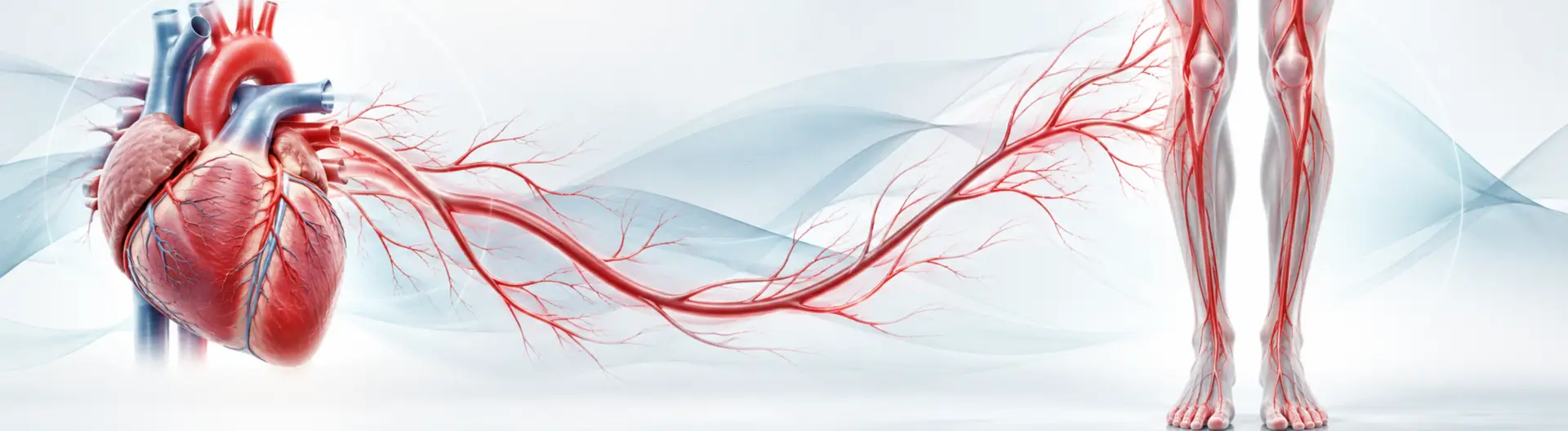
Peripheral Artery Disease, which causes the arteries supplying the legs to narrow over time, is one of the most common and most missed. The American Heart Association estimates it affects 200 million people worldwide ↗, and many of them have no idea.
Read Also: PAD Symptoms: What Your Leg Pain Might Be Telling You
Why Kern County Specifically
Kern County does not sit at average risk. It sits at the top of the risk scale for several of the conditions that drive vascular disease.
Kern County has the highest diabetes mortality rate in the entire state of California. Diabetes is one of the strongest independent risk factors for Peripheral Artery Disease, increasing risk two to four times compared to the general population according to the CDC ↗. High blood pressure and high cholesterol rates in the county are also significantly above the state average.
The combination of these risk factors with limited early access to specialist vascular care means that PAD in Kern County is both more common and more likely to go undetected until it is in a more advanced and harder-to-treat stage.
Vascular Disease Awareness Month is not just a national health calendar event. For Kern County residents, it is a genuinely relevant reminder that the risk is local and the consequences are real.
Read Also: If You Have Diabetes, Your Legs Are at Greater Risk Than You Think
What Conditions Are Worth Knowing About
This month highlights several vascular conditions that are particularly relevant for Kern County patients:
-
Peripheral Artery Disease (PAD): Narrowing of the leg arteries causing leg pain when walking, slow-healing wounds, cold feet, and skin changes. Treatable early with minimally invasive procedures.
-
Chronic Venous Insufficiency and varicose veins: Venous disease causing leg swelling, heaviness, and visible vein changes. Highly treatable.
- Lower extremity ulcers: Non-healing wounds on the feet or lower legs, often a complication of PAD or diabetes-related vascular damage.
-
Leg swelling and skin discoloration: Often dismissed as normal aging but frequently signs of underlying vascular disease.
What a Vascular Screening Involves
At Heart Vascular and Leg Center, a vascular screening starts with an Ankle-Brachial Index test. It compares blood pressure at the ankle to blood pressure in the arm, giving a clear measure of how well blood is reaching the lower legs. It is non-invasive, painless, and takes a few minutes. Learn more about vascular testing here.
For patients where the results indicate narrowed arteries or restricted flow, Dr. Vinod Kumar and his team offer minimally invasive treatment options including angioplasty, atherectomy, and angiogram. All performed in an office-based setting, no hospital stay required.
September is the right time to find out where you stand. Not because of the awareness calendar, but because the earlier vascular disease is identified, the more options exist to address it.
Frequently Asked Questions
What is Vascular Disease Awareness Month?
September is Vascular Disease Awareness Month and Peripheral Artery Disease Awareness Month simultaneously. It was established to spotlight vascular conditions like PAD, deep vein thrombosis, and chronic venous insufficiency, which are common, often underdiagnosed, and significantly more treatable when caught early.
Why are Kern County residents at higher risk for vascular disease?
Kern County has the highest diabetes mortality rate in California, and diabetes is one of the strongest risk factors for Peripheral Artery Disease. High rates of high blood pressure and high cholesterol in the county compound that risk further. Combined with limited early access to specialist vascular care, Kern County patients are more likely to develop advanced vascular disease before receiving appropriate evaluation.
What does a vascular screening involve?
A vascular screening at Heart Vascular and Leg Center typically starts with an Ankle-Brachial Index test, which compares blood pressure at the ankle and arm to assess arterial blood flow to the lower legs. It is non-invasive, painless, and takes a few minutes. No hospital visit is required.
Who should get a vascular screening this September?
Anyone with diabetes, high blood pressure, high cholesterol, or a history of smoking who has not had a vascular evaluation. Also anyone experiencing leg pain when walking, persistent leg swelling, slow-healing wounds on the feet or lower legs, or cold or numb feet. These are common signs of Peripheral Artery Disease that are worth investigating.
Where can I get a vascular screening in Bakersfield?
Heart Vascular and Leg Center, located at 5020 Commerce Drive, Bakersfield, CA, offers non-invasive vascular testing and PAD evaluation. Call 661-324-4100 or visit heartandleg.com to book an appointment with Dr. Vinod Kumar, MD, FACC.





Follow us on: