
PAD, AFib, and Heart Disease. Why These Three Conditions Are More Connected Than You Think.
 |
September brings two awareness campaigns together that are more related than most people realize.
Vascular Disease Awareness Month spotlights conditions like Peripheral Artery Disease, which affects the arteries in the legs. AFib Awareness Month draws attention to atrial fibrillation, an irregular heart rhythm that significantly increases stroke risk.
These might seem like separate health concerns managed by different specialists in different parts of the body. But for many patients, they are not separate at all. They are different expressions of the same underlying arterial and cardiovascular disease process, and they dramatically amplify each other’s risks when they appear together.
What These Three Conditions Have in Common
Peripheral Artery Disease, AFib, and coronary heart disease share an almost identical risk factor profile. The conditions that drive all three are the same: diabetes, high blood pressure, high cholesterol, smoking, physical inactivity, and age.
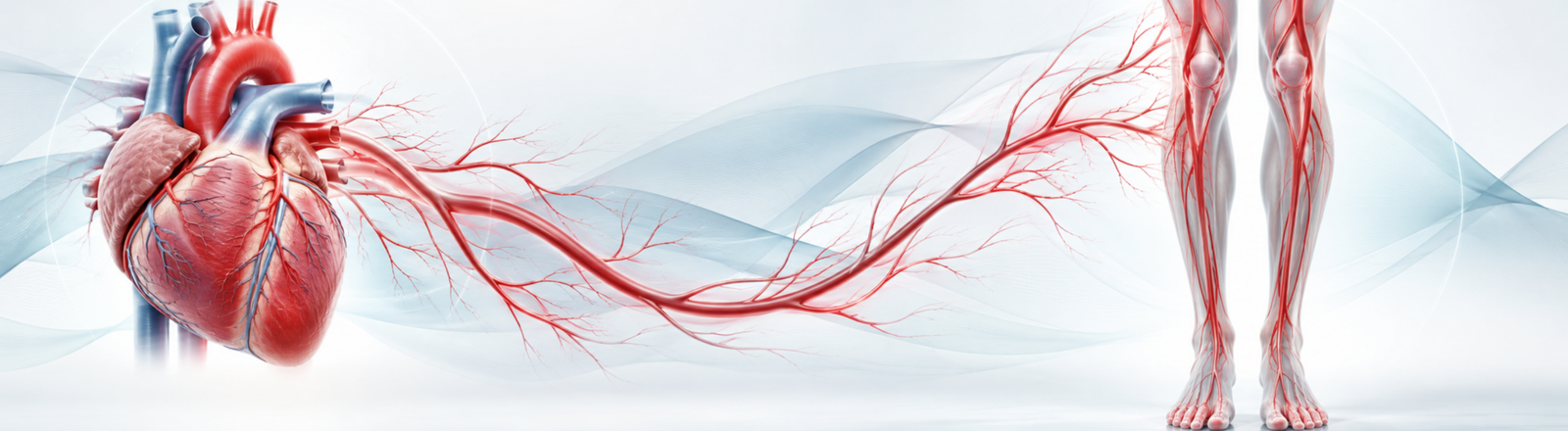
This is not a coincidence. Atherosclerosis, the buildup of plaque in artery walls, affects the entire arterial system. When it narrows the leg arteries, you get Peripheral Artery Disease. When it affects the coronary arteries, you get heart disease. The American Heart Association notes that AFib shares many of the same risk factors and frequently co-occurs with atherosclerotic vascular disease ↗. A patient managing one of these conditions is statistically likely to be at risk for the others.
The problem is that most patients are managed in siloed care pathways. The cardiologist manages the AFib. The general practitioner monitors cholesterol. Nobody systematically asks whether the leg arteries have been evaluated.
Read Also: Your Heart Gets a Lot of Attention. Your Leg Arteries Deserve the Same
How PAD Raises the Cardiovascular Stakes
Peripheral Artery Disease is not just a leg problem. People with PAD are two to four times more likely to have a heart attack or stroke than those without it ↗, according to the American Heart Association. This is because PAD is a marker of systemic atherosclerosis. The plaque narrowing the leg arteries is the same plaque affecting the coronary and carotid arteries. Treating the leg condition does not automatically address the systemic disease.
When PAD and AFib occur together, the risk compounds further. AFib increases clot formation in the heart, raising stroke risk. PAD indicates widespread arterial disease, raising heart attack risk. A patient who has both conditions faces a significantly elevated risk of a major cardiovascular event, and yet the two conditions are often managed by different providers without direct coordination.
This is why a patient presenting to a vascular specialist with leg pain when walking, poor circulation, or slow-healing wounds should also be asked about cardiac history. And a patient being managed for AFib or coronary disease should be asked about their leg circulation.
Read Also: PAD Symptoms: What Your Leg Pain Might Be Telling You
The Signs That Warrant a Full Vascular and Cardiac Evaluation
If you have any combination of the following, a comprehensive evaluation covering both the cardiac and vascular systems is worth requesting:
- Diagnosed AFib, heart disease, or a history of heart attack or stroke, and you have never had your leg arteries checked
- Leg pain when walking, cold feet, or leg swelling alongside a cardiac diagnosis or significant cardiovascular risk factors
- Diabetes combined with any cardiovascular condition, since the CDC identifies diabetes as increasing PAD risk by two to four times on its own ↗, and the combination with cardiac disease compounds that risk significantly
- A family history of both heart disease and circulation problems in the legs
- Skin changes on the lower legs or wounds that are slow to heal in a patient who also has a cardiac condition
How Heart Vascular and Leg Center Approaches This
The name of this clinic is not accidental. Heart Vascular and Leg Center was built around exactly this intersection. Dr. Vinod Kumar is an Interventional Cardiologist, meaning his training covers both cardiac and peripheral vascular disease. The clinic evaluates and treats both the cardiovascular and peripheral vascular dimensions of a patient’s health, rather than treating leg symptoms in isolation from cardiac context.
Patients with a cardiac history who have leg symptoms, and patients with confirmed PAD who have not been asked about their cardiac health, are exactly the patients this practice is designed to serve. Vascular testing at the clinic includes Ankle-Brachial Index assessment, echocardiogram, cardiac stress testing, and Holter monitoring, giving a comprehensive picture rather than a fragmented one.
As Vascular Disease Awareness Month and AFib Awareness Month both close out in September, the message is the same: these conditions are not separate stories. For many patients, they are the same story being told by different parts of the body.
Frequently Asked Questions
What is the connection between PAD and heart disease?
Peripheral Artery Disease and heart disease are both caused by atherosclerosis, the buildup of plaque in the artery walls. PAD affects the leg arteries and heart disease affects the coronary arteries, but the underlying process is the same and occurs throughout the arterial system simultaneously. People with PAD are two to four times more likely to have a heart attack or stroke than those without it, making PAD a significant marker of systemic cardiovascular risk.
Does PAD increase the risk of AFib?
PAD and AFib share the same risk factors: diabetes, high blood pressure, high cholesterol, smoking, and age. They frequently occur together because both are expressions of widespread arterial and cardiovascular disease. When a patient has both PAD and AFib, the risks compound. AFib increases clot and stroke risk, while PAD indicates systemic atherosclerosis that raises heart attack risk.
If I have AFib, should I get my leg arteries checked?
Yes, this is worth discussing with your doctor. Because AFib and PAD share the same risk factors and frequently co-occur, a patient being managed for AFib has an elevated likelihood of also having peripheral arterial disease. A simple Ankle-Brachial Index test can assess whether leg artery blood flow is healthy and takes only a few minutes.
What does a comprehensive vascular and cardiac evaluation include?
At Heart Vascular and Leg Center, a comprehensive evaluation can include Ankle-Brachial Index testing for leg circulation, vascular ultrasound, echocardiogram to assess heart function, cardiac stress testing, and Holter monitoring for heart rhythm assessment. The approach is designed to evaluate both the cardiovascular and peripheral vascular dimensions of a patient’s health together rather than in isolation.
Where can I get a combined vascular and cardiac evaluation in Bakersfield?
Heart Vascular and Leg Center, 5020 Commerce Drive, Bakersfield, CA, is led by Dr. Vinod Kumar, MD, FACC, an Interventional Cardiologist with training in both cardiac and peripheral vascular disease. The clinic offers comprehensive evaluation covering both systems. Call 661-324-4100 or visit heartandleg.com to book.








Follow us on: