
You Have Been Managing Your Knee Pain. But Are You Actually Getting Better?
 |
August is National Wellness Month. A time when a lot of people take stock of their health and ask themselves honestly: am I doing better than I was six months ago?
For anyone living with chronic knee pain, that question often has an uncomfortable answer.
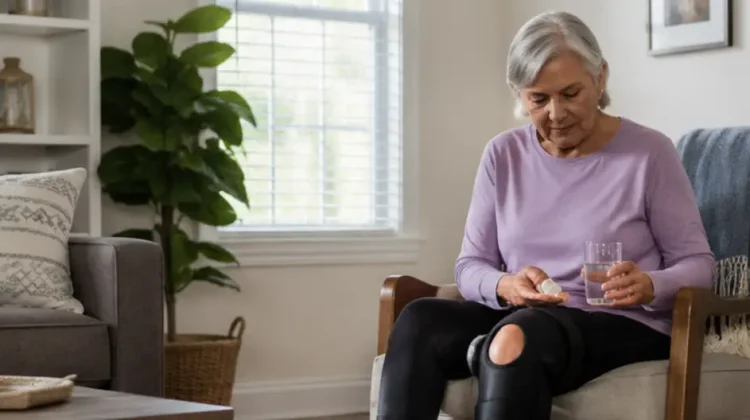
The painkillers are the same. The routine of avoiding certain movements has become second nature. The knee brace comes out for anything more demanding than a short walk. Things are not worse exactly, but they are not better either.
There is a difference between managing pain and treating it. Most people living with chronic knee pain are doing the first. Very few have addressed the second.
What Managing Pain Actually Does
Painkillers reduce the signal. Rest reduces the load. A brace stabilizes the joint. All of these are legitimate strategies, and they make daily life more bearable.
But none of them change what is happening inside the knee. Research published in the New England Journal of Medicine found that arthroscopic knee surgery for a meniscal tear was no more effective than physical therapy or sham surgery in patients with knee osteoarthritis. A finding that has pushed some specialists to look beyond structural repair and investigate the joint’s vascular and inflammatory activity instead. ↗, in large part because treatments focused on structure rather than the inflammatory vascular component. The abnormal blood vessels that are keeping the joint irritated continue their activity even when symptoms are suppressed.
This is why pain tends to creep back the moment you reduce the medication, push your activity, or have a bad night of sleep. The source has not been addressed. Only the response to it has been quieted temporarily.
Read Also: The Real Reason Your Knee Pain Keeps Coming Back. And What Actually Helps
What Chronic Pain Does to the Body Over Time
Chronic pain is not just a sensation. It changes behavior, and those behavior changes create their own problems.
When a knee hurts, people move less. When they move less, the muscles around the joint weaken. Weaker muscles put more load on the joint itself. The CDC estimates that physical inactivity in arthritis patients can increase the risk of cardiovascular disease, diabetes, and further joint deterioration ↗. The pain fuels the inactivity. The inactivity worsens the condition.
There is also a weight component. Less movement often means gradual weight gain, which puts additional pressure on the knee with every step. Extra body weight adds a multiplied force load on the knee joint during normal walking.
This is not a criticism. It is a cycle that happens naturally when pain is managed rather than treated. Breaking the cycle requires addressing the underlying source of the pain.
When Management Stops Being Enough
There tends to be a moment when patients realize the coping strategies are not coping anymore. The dose that used to work is no longer touching it. The activities given up a year ago have been joined by new ones.
That moment is actually important. It is a signal that the condition is progressing. The question worth asking at that point is not “what else can I take” but “what is actually causing this, and has it ever been properly addressed?” For many patients with chronic knee pain and osteoarthritis, the answer to the second question is no.
Read Also: Your Doctor Said Bone on Bone. Does That Actually Mean You Need Surgery?
What Treating the Source Actually Looks Like
A significant driver of chronic knee pain is vascular inflammation in the joint lining. Tiny abnormal blood vessels keep the inflammatory cycle active regardless of what the patient is taking or avoiding. Published clinical studies on Genicular Artery Embolization have shown statistically significant reductions in pain scores in patients with knee osteoarthritis ↗, particularly those who have not responded well to conservative management.
Genicular Artery Embolization is a minimally invasive outpatient procedure. No hospital stay. No general anesthesia. A specialist uses imaging guidance to deliver tiny particles into the abnormal blood vessels, reducing the inflammation at its source. Patients go home the same day.
It does not rebuild cartilage, and it is not a cure for arthritis. But for patients whose pain has been driven primarily by vascular inflammation, it can provide a level of relief that years of management strategies have not.
Who This Is Worth Discussing With
It is worth discussing with Dr. Vinod Kumar and the team at Heart Vascular & Leg Center if:
- You have been managing knee pain for more than six months with limited improvement
- Painkillers, physio, or injections have helped temporarily but not resolved the problem
- You have been told surgery is the next step but are not ready or not eligible for it
- The pain is affecting your ability to stay active, maintain weight, or do things you care about
- Related conditions like chronic hip pain or chronic heel and foot pain are also present
National Wellness Month is a good time to ask honestly whether managing the pain is the same as improving. If the answer is no, it is worth finding out what improving might actually look like.
|
Ready to find out what is actually driving your knee pain? Book a consultation at heartandleg.com | Call 661-324-4100 | Bakersfield, CA |
Frequently Asked Questions
What is the difference between managing knee pain and treating it?
Managing pain reduces the symptom without addressing the cause. Painkillers, braces, and rest suppress the pain signal but do not change what is happening inside the joint. Treating the pain means addressing the underlying source, such as the vascular inflammation in the joint lining. Genicular Artery Embolization is one approach that targets this source directly.
Why does my knee pain keep coming back even with painkillers?
Because painkillers reduce the pain signal without removing the cause. If vascular inflammation in the joint lining is driving the pain, it continues even when the pain response is suppressed. Once the medication wears off, the pain returns. Addressing the inflammation at its source is what breaks the cycle.
When should I consider Genicular Artery Embolization for knee pain?
It is worth considering if you have had chronic knee pain for six months or more, if conservative treatments have not produced lasting improvement, and if you are not ready or eligible for knee replacement surgery. A vascular evaluation is the best way to determine whether this approach is appropriate.
Is Genicular Artery Embolization available near me in Bakersfield?
Yes. It is available at Heart Vascular & Leg Center, 5020 Commerce Drive, Bakersfield, CA, performed by Dr. Vinod Kumar, MD, FACC. It is an outpatient procedure with no hospital stay. Call 661-324-4100 or visit heartandleg.com to book a consultation.
How long does it take to feel improvement after Genicular Artery Embolization?
Most patients begin to notice relief within a few days of the procedure. Improvement typically continues over the following weeks as the inflammation in the joint gradually settles. The pace of recovery varies by patient and by how advanced the condition is.







Follow us on: