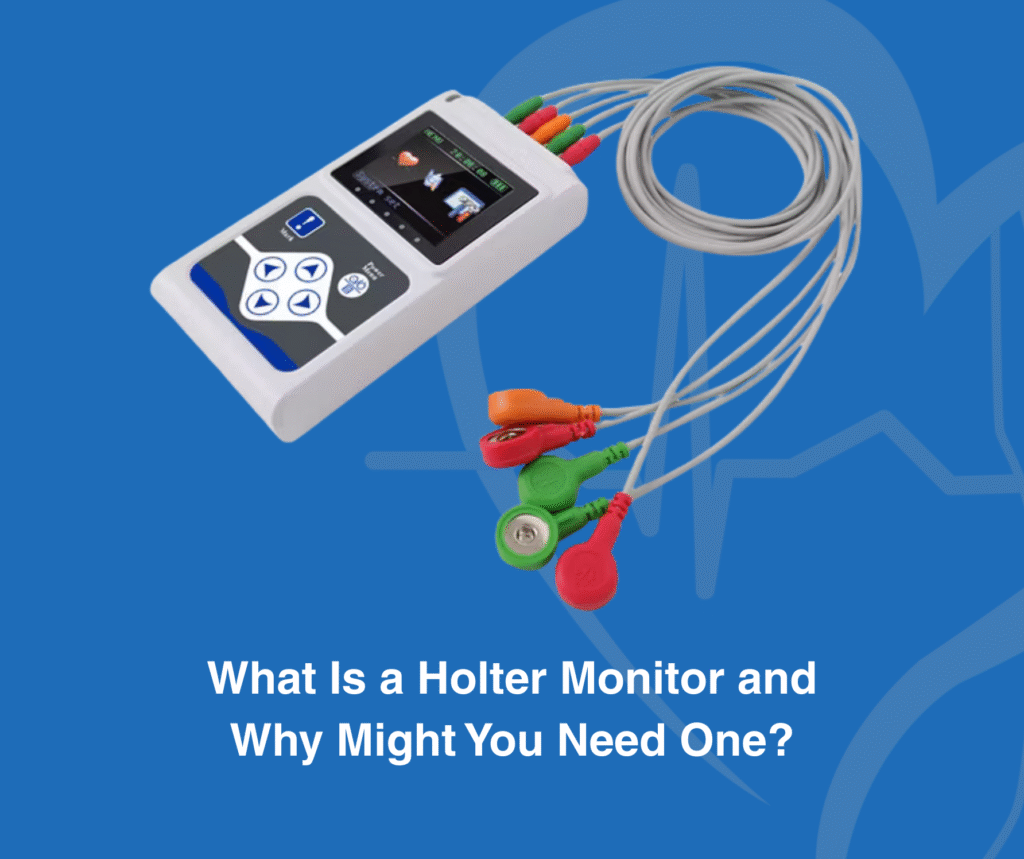
A Holter monitor is a device that tracks the electrical activity of your heart continuously for 1-2 weeks at a time while you go through your normal activities.
These devices are small and portable.
Doctors recommend Holter monitors for patients experiencing fleeting symptoms such as:
A standard EKG in the office only looks at a few seconds of your heart rhythm. If the problem isn’t happening right then, it gets missed. The Holter almost never misses it.
The device is small, too, smaller than a deck of cards.
The device is painless and does not make beeping sounds. After a little while, many patients forget that they even have the monitor on.
We clean a few spots on your chest, stick on five or six small electrodes, and connect thin wires to the recorder. That’s it.
You can wear your regular clothes over everything. You’re free to go to work, walk the dog, cook dinner, or hit the gym (light to moderate exercise is actually helpful).
We give you a simple diary sheet. When you feel something off, like a racing heart, dizziness, or chest pressure, you write down the time and what you were doing.
That one line of information often turns a long recording into a clear answer.
Patients usually get referred for a Holter when:
It’s a low-effort test that catches things nothing else can.
Book an appointment, call us at 661-324-4100.
Read more: How Do I Know If My Heart Is Healthy?
You return the monitor the next day or a couple days later (whatever we scheduled). We download the full recording.
Sometimes over 100,000 heartbeats, and a cardiac technician reviews every single one.
Your cardiologist then looks at the report next to your diary notes. Most patients have their results explained within 2-4 business days.
About half the time everything is normal, which rules out a dangerous rhythm problem.
The other half, we typically find something we can treat. This includes:
Once we know the mechanisms that are responsible, it then becomes easy for us to fix or manage.
Some people only get symptoms every few weeks. For them we use longer options:
We choose the one that makes the most sense for how often your symptoms actually show up.
Insurance, including Medicare, almost always covers Holter monitoring when your doctor orders it for a medical reason.
If you’ve been telling yourself “it’s probably nothing” every time your heart races or you feel like you might pass out, stop guessing.
A day or two with a monitor can give you a real answer instead of wondering.
Schedule an appointment with Heart Vascular and Leg Center, call us at 661-324-4100.
How long do I really have to wear it?
Most often 24–48 hours. We go longer only if your symptoms are rare.
Can I shower or swim?
Older wired models, no swimming, but showering is fine with a plastic cover. Patch monitors are 100% waterproof.
Does it hurt or beep all day?
No pain, no noise. Taking the stickers off feels like ripping off a bandage.
When will I know the results?
Usually within a few days. We call you as soon as the cardiologist signs off.
Take an hour out of your week to get answers that could last a lifetime.

Also visit:

