It Is Not in Your Head – Cold Weather Really Does Hurt More
Every year, as temperatures drop, the same pattern appears in clinics that treat chronic joint pain.
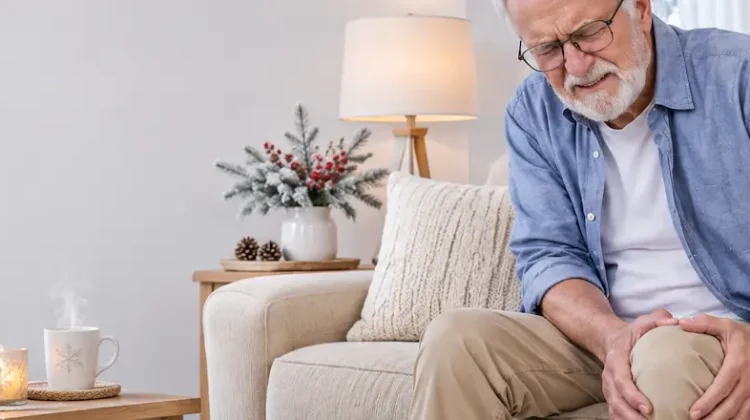
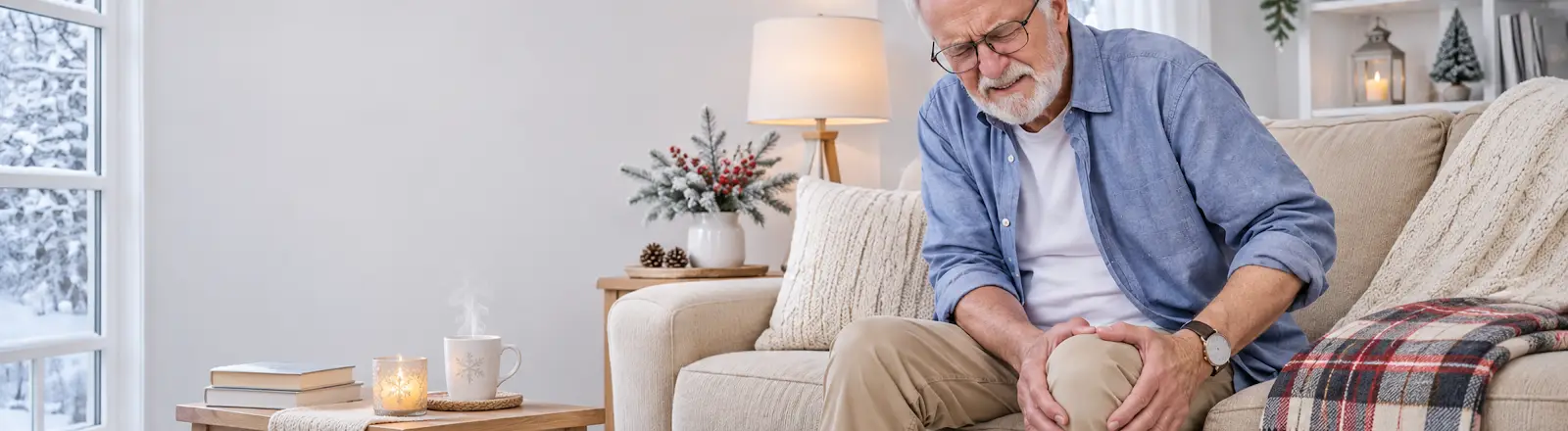
Patients who managed through the summer – functional, relatively stable – start calling in November. Their knees are worse. Their hips ache through the night. Heel pain that was almost manageable has come back with force.
They often preface the appointment with some version of: “I know this sounds strange, but the cold makes everything hurt more.”
It does not sound strange. The physiology supports exactly what they are describing. Cold weather does not create joint disease – but it amplifies the pain of existing disease through several well-documented mechanisms. Understanding those mechanisms is the first step toward addressing them effectively, rather than waiting for spring and hoping the pain subsides.
The Four Mechanisms Behind Winter Joint Pain
1. Barometric Pressure Changes
As cold fronts move in, atmospheric pressure drops. Joint tissue – specifically the synovial membrane and periarticular structures – responds to pressure changes. Reduced barometric pressure allows already-inflamed or degenerative tissue to expand slightly, increasing pressure within the joint capsule. For a joint that is already compromised, that additional pressure translates directly to pain.
This is why many patients report pain before a storm arrives – not after. The pressure drop precedes the cold.
External resource: Barometric pressure and joint pain – published research overview (Arthritis Foundation)
2. Reduced Peripheral Circulation
In cold temperatures, the body’s core thermoregulation response is to constrict peripheral blood vessels – particularly in the extremities – to preserve core body heat. This is vasoconstriction, and it is an entirely normal physiological response.
For patients with existing vascular disease – peripheral artery disease, chronic venous insufficiency, or the microvascular compromise associated with diabetes – this seasonal reduction in peripheral circulation compounds an already-compromised baseline. Less blood flow to already-vulnerable tissue means slower tissue oxygenation, reduced nutrient delivery, and a pain environment that becomes more hostile with every degree of temperature drop.
It also means that the abnormal neovascular networks in chronically painful joints – the very networks that procedures like GAE and TAME target – become less well-regulated. The vascular component of chronic joint pain is not separate from the circulatory picture. They are the same picture.
Read also: Genicular Artery Embolization for Chronic Knee Pain
3. Synovial Fluid Changes
Synovial fluid is the lubricant inside the joint capsule. Its viscosity – how thick or thin it is – changes with temperature. In cold conditions, synovial fluid becomes more viscous. The joint moves less freely. The mechanical friction increases. In healthy joints, this is barely noticeable. In joints with degenerative disease, reduced cartilage, or synovial thickening, increased viscosity means increased stiffness, reduced range of motion, and pain with movements that were manageable in warmer months.
The classic morning stiffness that patients with knee or hip OA describe – the first twenty minutes after getting out of bed when the joint barely cooperates – is worse in winter for exactly this reason.
4. Reduced Physical Activity
Cold weather reduces outdoor activity. Less walking, less movement, less joint loading. For joints that depend on movement to maintain synovial fluid circulation and periarticular muscle support, reduced activity accelerates the deconditioning that worsens chronic pain. Muscles that support the knee or hip weaken over a sedentary winter. Joint stability decreases. Pain increases.
This is a compounding cycle: the pain of winter discourages the movement that would help reduce that pain.
External resource: Exercise and joint pain management – American College of Rheumatology
Why Conservative Treatment Plateaus in Winter
Patients who have been managing chronic joint pain with NSAIDs, cortisone injections, or physical therapy often notice that their usual tools work less well in colder months. There are two reasons for this.
First, the physiological amplification mechanisms above are adding to the pain burden – and the conservative tools were calibrated for the baseline, not the amplified state.
Second, for patients who have been in the chronic phase of their joint disease for more than three months, the inflammatory component has already given way to a vascular, degenerative one. Cortisone and NSAIDs are designed for inflammation. When the inflammation is no longer the primary driver, their therapeutic ceiling is limited regardless of season.
Winter simply makes that ceiling more visible.
Read also: Chronic Hip and Joint Pain – Conditions Overview
What Actually Helps: Addressing the Root Cause
Managing winter joint pain symptomatically – more heat, more rest, waiting it out – addresses the amplifier, not the source. For patients with established neovascularization driving their chronic pain, that approach leaves the primary driver untreated.
The procedures that address the vascular mechanism directly are available year-round and are not affected by seasonal weather:
Genicular Artery Embolization (GAE) for Chronic Knee Pain
GAE targets the abnormal blood vessel network in the knee’s synovial tissue through a catheter-based procedure. By reducing blood flow to the neovascular tissue, it quiets the sensory nerve signal that has been sustaining the pain. Results build over six to twelve weeks. Winter is not a contraindication – it is, in fact, a practical time to begin the treatment process, so that recovery aligns with spring.
Read also: GAE – Genicular Artery Embolization Treatment Page
TAME for Shoulder and Hip Pain
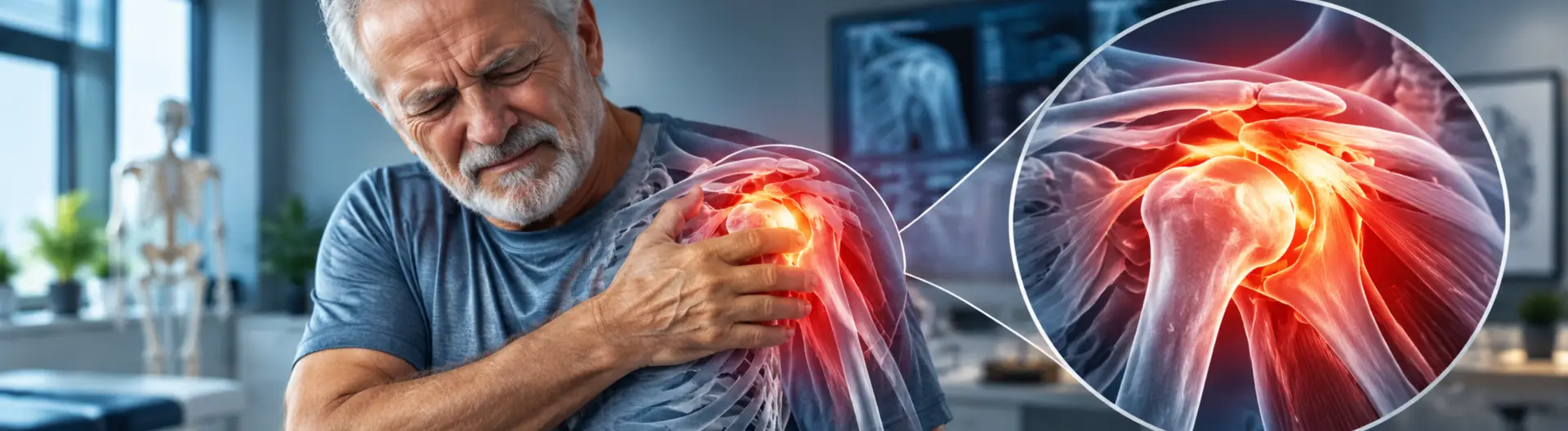
Targeted Arterial Micro-Embolization uses the same catheter-based vascular approach for chronic shoulder and hip pain driven by synovial neovascularization. Patients with shoulder tendinopathy that has failed cortisone and physical therapy, or chronic hip pain without structural surgical indication, are typical TAME candidates. The procedure and recovery timeline are similar to GAE.
Plantar Fascia Embolization (PFE) for Heel Pain
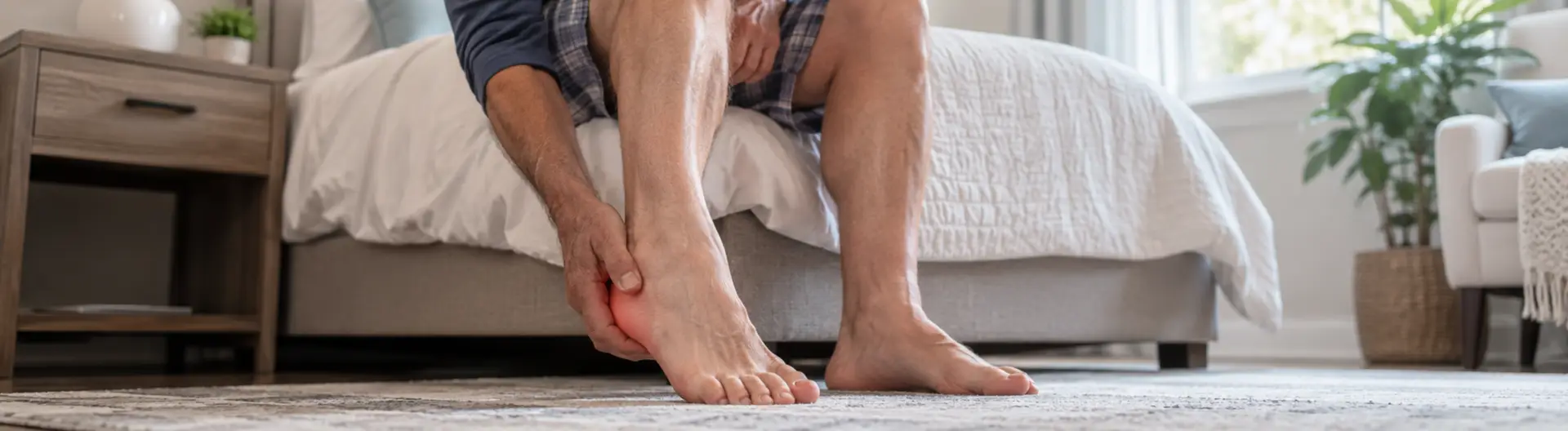
Heel pain that is worse in the first steps of the morning – and particularly worse in winter – often reflects chronic plantar fasciosis with a neovascular component. PFE addresses that directly. Patients who have been through multiple cortisone injections with diminishing returns are the population most likely to benefit.
Read also: Chronic Heel and Foot Pain – Conditions and Treatment
Practical Strategies While You Wait for an Evaluation
While a vascular evaluation is being arranged, these approaches can help manage winter amplification:
- Keep affected joints warm – compression sleeves, thermal layers, heated joint wraps
- Maintain indoor movement – even gentle range-of-motion exercises preserve synovial fluid circulation and periarticular muscle tone
- Monitor barometric pressure on weather apps – many patients find that anticipating pressure drops (and resting more on those days) helps manage flares
- Stay hydrated – synovial fluid composition is partly water-dependent; reduced winter hydration worsens viscosity
- Discuss activity modifications with your care team – not stopping movement, but adapting it for the season
These strategies reduce the seasonal amplification. They do not address the underlying vascular driver. For durable improvement, the root mechanism needs to be evaluated and treated.
External resource: Joint protection strategies in cold weather – British Journal of Sports Medicine
Frequently Asked Questions
Is winter the wrong time to get a joint procedure done?
No – winter is actually a practical time. Recovery from minimally invasive procedures like GAE and TAME involves light activity restrictions for one to two weeks. If treatment begins in November or December, the peak improvement window (six to twelve weeks post-procedure) aligns with spring. Scheduling around the season is sensible.
My joint pain is worse when it rains – is that the same thing as cold weather pain?
Related but slightly different. Rain is preceded by barometric pressure drops, which affect joint tissue as described above. Cold weather also involves pressure changes, plus the additional effects on circulation and synovial fluid. Patients who are sensitive to weather changes generally experience both.
I have arthritis – is there anything that can actually help long-term?
That depends on what type and stage of arthritis, and what has been tried. For mild to moderate knee, hip, or shoulder OA with a confirmed neovascular component, GAE or TAME can provide significant and durable pain reduction. A vascular evaluation is the right starting point to determine whether the vascular mechanism is active.
Why does my heel hurt more in the mornings in winter?
Plantar fasciosis – the chronic form of heel pain – involves neovascular tissue in the plantar fascia that becomes more pain-sensitized in cold conditions due to peripheral vasoconstriction and reduced plantar soft tissue compliance in cold temperatures. Morning pain specifically reflects the tissue having been unloaded overnight, with the first steps reloading a sensitized structure. PFE addresses the underlying neovascular component.
Related Pages
- Genicular Artery Embolization – Knee Pain Treatment
- Chronic Heel and Foot Pain – Treatment Overview
- Chronic Hip and Joint Pain – All Conditions
- Plantar Fascia Embolization
- Contact and Appointments
Sources and External References
- Arthritis Foundation – Weather and Joint Pain
- American College of Rheumatology – OA Management Guidelines
- British Journal of Sports Medicine
- Journal of Vascular and Interventional Radiology (JVIR)
Don’t Wait for Spring to Address Your Joint Pain
Chronic joint pain does not get better on its own – and winter is not a reason to delay evaluation. A vascular assessment can identify whether a minimally invasive procedure is the right step for you.
Heart Vascular and Leg Center – Bakersfield, CA
Phone: 661-324-4100
Website: heartandleg.com
Appointments available. Referrals welcome.





Follow us on: