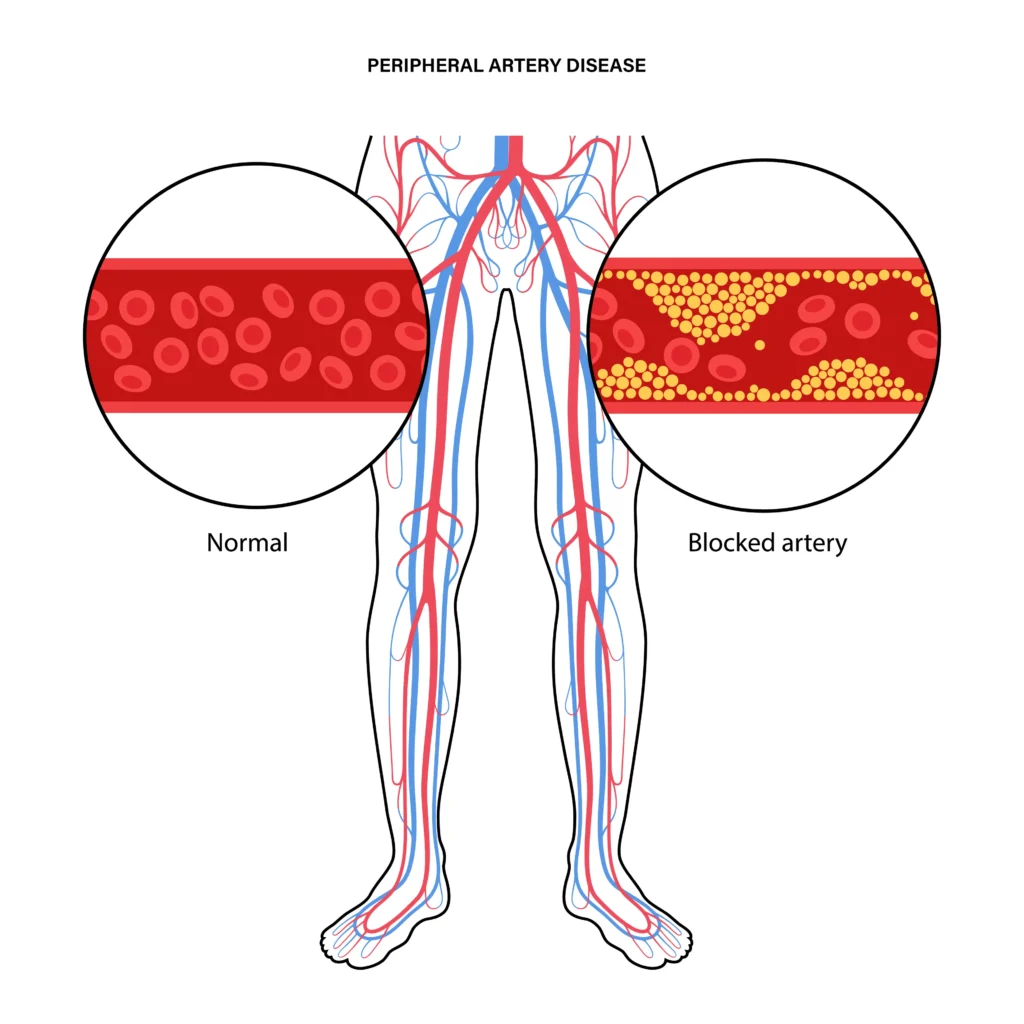
Peripheral Artery Disease (PAD) affects millions of Americans, yet it remains one of the most underdiagnosed forms of cardiovascular disease.
PAD occurs when arteries supplying blood to the legs become narrowed or blocked, reducing circulation. It is caused by the same disease process responsible for heart attacks, but its symptoms often appear in the legs first.
PAD doesn’t always look the same for everyone. Symptoms may include:
Some people have no pain at all, making PAD especially dangerous.
PAD is more than a leg condition. It significantly increases the risk of:
Many patients are diagnosed only after a wound appears or circulation becomes critically compromised.
When PAD is identified early, treatment can:
Ignoring symptoms delays care—and increases complications.
Leg pain is not “just part of getting older.” During Heart Month, remember that PAD is heart disease showing up in the legs—and early attention matters.

Also visit:

