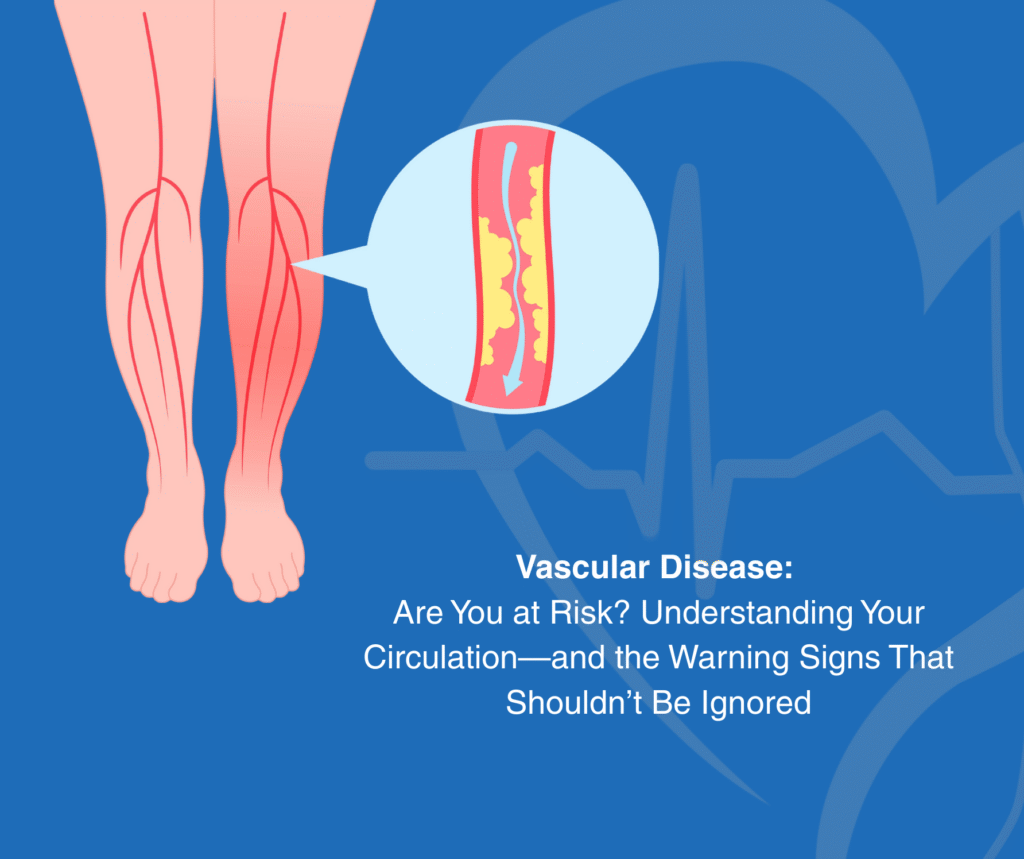
Vascular disease affects millions of people, often without obvious symptoms in the early stages.
Because circulation plays a vital role in every part of the body, problems with your blood vessels
can impact your heart, legs, brain, and overall health. The good news? Many vascular conditions are preventable and treatable when caught early.
This blog will help you understand what vascular disease is, who is at risk, and what signs to watch for so you can protect your long-term health.
Vascular disease refers to conditions that affect the arteries and veins, the pathways that carry blood throughout your body.
When these vessels become narrowed, weakened, or blocked, blood flow decreases, leading to pain, non-healing wounds, or more serious complications like stroke or limb-threatening circulatory issues.
Common vascular conditions include:
Anyone can develop vascular disease, but certain factors greatly increase your risk. These include:
Blood vessels naturally stiffen with age, increasing the likelihood of plaque buildup.
One of the strongest risk factors, smoking damages blood vessels and accelerates disease.
High blood sugar harms both nerves and blood vessels, increasing the risk of PAD and non-healing wounds.
(See The Diabetic’s Guide to Recognizing Silent PAD Symptoms)
These conditions contribute to plaque formation and reduce blood flow.
Genetics play a major role in your vascular risk.
Lack of activity reduces circulation and increases inflammation in the vessels.
This is often a sign of poor circulation and should be evaluated promptly.
If your calves, thighs, or hips hurt when you walk—but feel better when you rest—this may be claudication, a classic symptom of PAD.
Vascular disease often progresses quietly. Recognizing symptoms early can prevent major complications.
Watch for:
If you have diabetes, these symptoms are even more urgent, as poor circulation can lead to ulcers, infections, and in severe cases, amputation.
A vascular specialist can perform quick, non-invasive tests to evaluate your circulation. These
may include:
These tests are painless and completed during a routine office visit.
Depending on your results, your provider may recommend:
Many patients experience rapid improvement once circulation issues are identified and treated.
If you have risk factors, or if any of the symptoms above sound familiar, it may be time for a vascular evaluation.
Early detection is the key to preventing serious complications and keeping you active and healthy.
Your circulation is the foundation of your health. Don’t wait for symptoms to worsen. Get checked today.

Also visit:

