

Many people first notice it gradually: the skin around the ankles or lower legs starts to look darker, reddish, brown, or purplish. It’s easy to assume it’s just aging, sun exposure, or dry skin.
But very often, leg discoloration is an early sign of a vascular circulation problem, specifically involving the veins.
When blood does not flow efficiently back to the heart, it can pool in the lower legs. Over time, this pressure affects the skin, leading to a condition known as venous dermatitis (also called stasis dermatitis)—a clear signal that the veins are under strain.
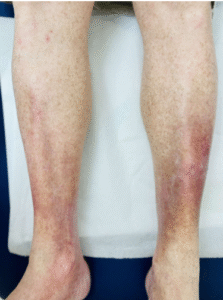
Healthy leg veins rely on one-way valves to push blood upward against gravity. When those valves weaken or fail, blood begins to flow backward and collect in the lower legs. This condition is called chronic venous insufficiency (CVI).
As pressure builds inside the veins:
This discoloration is often the very first visible sign of venous disease.
Venous disease is common and often progressive. Risk factors include:
You may or may not see bulging varicose veins. Even without visible veins, the deeper valves can still be failing.
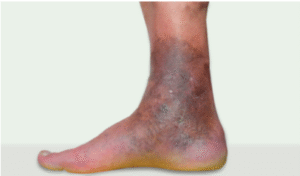
Leg discoloration typically starts near the inner ankle and slowly spreads upward. Depending on skin tone, it may appear brown, reddish, purple, or grayish.
Other early vascular symptoms often include:
These symptoms tend to develop slowly, which is why many people delay evaluation.
 Schedule an appointment: (661) 324-4100
When the underlying vascular issue isn’t addressed, the skin continues to suffer from poor circulation. Over time, this may lead to:
The good news: most people never reach these advanced stages when venous disease is identified early.
At Heart Vascular & Leg Center, we focus on treating the circulatory cause, not just the skin symptoms.
While you’re deciding on next steps, these habits can help relieve pressure in the veins:
These measures help symptoms—but they do not repair faulty vein valves.
If leg discoloration persists or is accompanied by swelling, itching, heaviness, or visible veins, it’s time for a vascular assessment.
A venous ultrasound is a simple, noninvasive test that shows:
At our Bakersfield office, evaluations and treatments are performed in-office, without hospital admission. Treating the malfunctioning veins allows healthy veins to take over circulation—often leading to lighter skin tone, less swelling, and legs that feel noticeably better.
Earlier treatment usually means easier recovery and better results.
Book an appointment: (661) 324-4100
Changes in leg skin color are often your body’s way of signaling a vascular issue. Ignoring it rarely makes it go away—but addressing it early can prevent progression and improve both comfort and appearance.
If you’ve noticed discoloration, swelling, or heaviness in your legs, the team at Heart Vascular & Leg Center is here to help you understand what’s happening and what options are available.
Schedule your evaluation today.
What does early venous dermatitis look like?
Can leg discoloration improve on its own?
Elevation and movement may help temporarily, but lasting improvement usually requires treating the underlying venous problem.
How serious can venous disease become?
If untreated, it can progress to skin thickening or slow-healing ulcers. Most cases remain very manageable with proper vascular care.
What treatments are commonly used?

